Abrianna Sweetie: A Playful Handwritten Font That Builds Brand Trust
As a small business owner who designs every label, posts every Instagram story, and handwrites every thank-you card, I know how much your typeface quietly shapes how customers feel about your brand. Abrianna Sweetie isn’t just another script font—it’s a genuine, warm, and intentionally playful handwritten typeface that brings authenticity to your visuals without sacrificing polish.
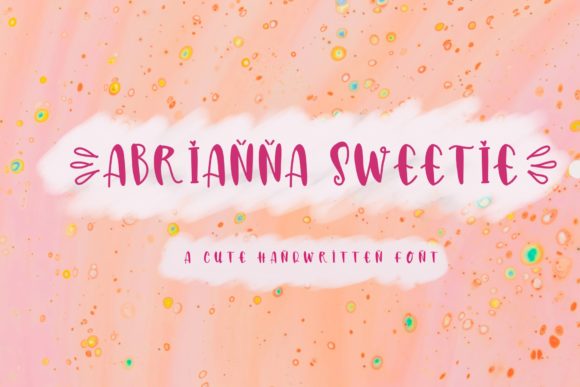
Abrianna Sweetie lives in the sweet spot between whimsy and professionalism. Its soft, bouncy letterforms have natural variation—slight shifts in stroke weight, gentle curves, and subtle flourishes—that make it feel human, not robotic. It’s not overly ornate or hard to read, and it avoids the “clip-art” look that can accidentally undermine credibility. Instead, it reads as thoughtful, intentional, and full of personality—exactly what your customers connect with when they’re choosing who to support.
I’ve used Abrianna Sweetie across real business touchpoints—and it delivers consistency where it matters most. On product labels for my small-batch candle line, it gives hand-poured soy wax and lavender-vanilla blends an approachable, artisanal feel. On café menu boards, it adds charm without cluttering the layout. And on Instagram carousel slides for my coaching business, it helps headlines stand out while keeping the tone inviting—not intimidating.
This Script Handwritten font works best as a display font: think logos, headers, packaging accents, social media banners, and website hero text. It’s not meant for long paragraphs or fine print—but that’s by design. Use it where you want attention, warmth, and emotional resonance. Pair it thoughtfully: try Abrianna Sweetie for your logo or headline, then pair it with a clean sans serif (like Montserrat or Inter) for body copy, pricing, or ingredient lists. That contrast creates visual hierarchy, improves readability, and keeps your brand looking both expressive and grounded.
For packaging, Abrianna Sweetie shines on sticker seals, jar labels, and gift tags. Its rounded forms hold up beautifully at small sizes—even down to 12–14pt on a 2 oz candle label—especially when printed with crisp ink or high-resolution digital printing. On mobile screens, it remains legible in thumbnails and Stories when used sparingly and with enough contrast against the background. Just avoid placing it over busy photos or low-contrast gradients; give it breathing room and simple, clean backdrops.
Real-world examples help clarify its fit. A handmade soap maker might use Abrianna Sweetie for the product name (“Oat & Honey Bliss”) on the front label, then switch to a light-weight sans serif for scent notes and ingredients. A children’s boutique could feature it in their shop sign and website banner—evoking joy and care—while using a friendly serif for size charts and return policy text. Even service-based businesses benefit: a wedding planner uses it for invitation suite headings and “Yes, Let’s Celebrate!” email subject lines, reinforcing warmth and personal connection before the first meeting.
Consistency builds trust—and Abrianna Sweetie makes consistency easier to achieve. When your logo, packaging, social bios, and thank-you cards all share the same expressive voice, customers begin to recognize your brand instantly, even without seeing your name. That recognition compounds over time. It tells people you pay attention to detail. It signals intention—not just aesthetics, but alignment between your values and your visuals.
Before committing Abrianna Sweetie across your entire brand system, test it in context. Drop it into your actual Canva template, mock up a few Instagram post variations, print a sample label at home, and check how it looks on your phone screen. Try pairing it with your current secondary font—or experiment with one of the clean, widely available Google Fonts like Lato or Open Sans. See how it feels next to your colors, photography style, and product textures. Does it enhance your message—or compete with it?
Licensing is practical, not bureaucratic. Abrianna Sweetie is a commercial font, so be sure your license covers the ways you plan to use it: on physical product labels, digital ads, client-facing templates, or downloadable assets like printable planners or workshop workbooks. Most reputable sellers include clear licensing terms—if yours doesn’t, reach out before purchasing. Using a font without proper rights can create legal risk and force costly rebrands later.
One thing I’ve learned after years of tweaking fonts across five different businesses: the right typeface doesn’t just look good—it reduces decision fatigue. With Abrianna Sweetie, I no longer second-guess whether my holiday promo feels “friendly enough” or if my new tea blend label conveys care. Its personality is clear, consistent, and ready to support my messaging—not distract from it.
It’s also surprisingly versatile within its category. Unlike some highly stylized script fonts that only suit pastel palettes or floral themes, Abrianna Sweetie holds its own with earthy tones, bold typography layouts, and minimalist design. A ceramics studio uses it for pottery collection names alongside raw clay textures. A pet treat brand uses it for flavor names (“Peanut Butter Pup”) on kraft bags—adding playfulness without undermining quality perception.
If you’re refreshing your brand identity or launching something new, start small. Apply Abrianna Sweetie to one high-impact asset—your logo lockup, your Etsy shop banner, or your most-used Instagram Story template. Notice how customers respond. Then expand intentionally: add it to your packaging, update your email signature, refresh your website’s CTA buttons. Let it earn its place across your brand—not all at once, but with purpose.
At its core, Abrianna Sweetie is more than a decorative choice. It’s a tool for clarity, cohesion, and connection. It helps your small business communicate who you are—not just what you sell. And in a crowded marketplace, that authenticity, paired with thoughtful execution, is what turns casual browsers into loyal customers.